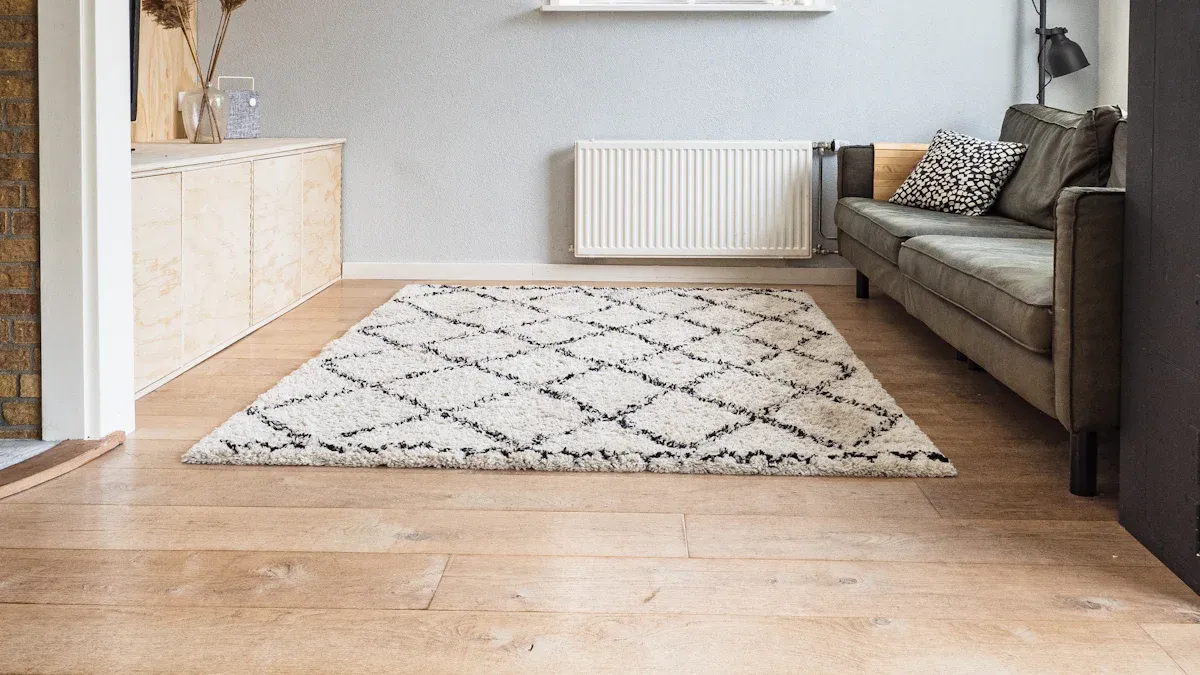
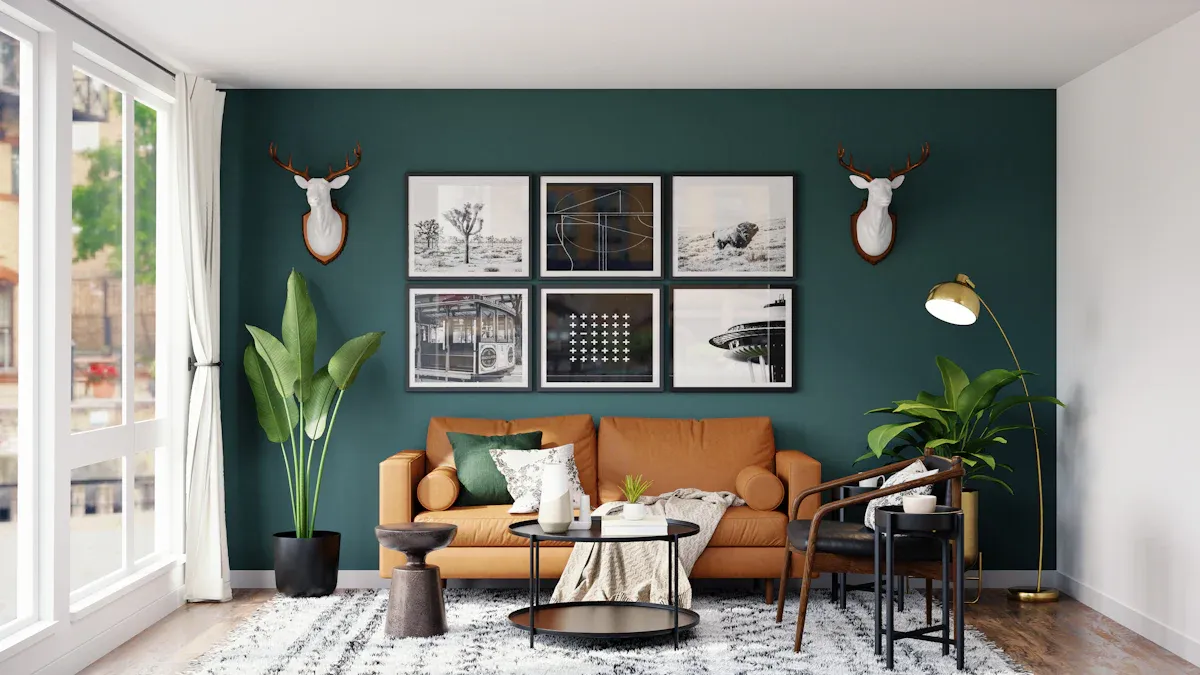
You can make almost any living room feel more finished by choosing the right rug size—and placing it with intention. This guide gives you the measurement rules, layout shortcuts, and shopping links you can use in minutes, whether you’re styling a small apartment or a larger open concept space.
Why this guide works: It’s built around real measurements, renter-friendly limits (no permanent installs), and daily usability—walking paths, doors, vacuuming, and furniture stability.
Related guides
Top Picks / Fastest Wins
If you want the simplest “buy once, place it, done” outcome—start here.
- Average living rooms: Shop 8×10 living room rugs (best balance for most seating areas).
- Large rooms or sectionals: Shop 9×12 living room rugs (more “all legs on” options).
- Small spaces: Shop 5×8 rugs for apartments (works when furniture must float off-rug).
- Make any rug feel better: Add a non-slip rug pad (comfort + safety + less bunching).
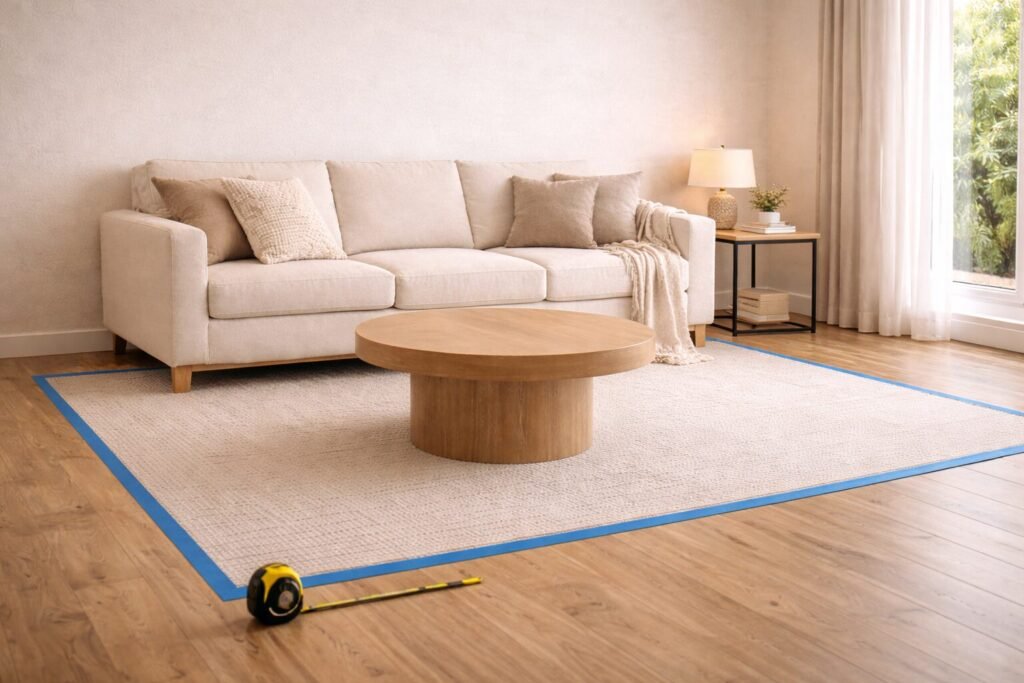
- Quick layout test: Grab painter’s tape to outline sizes before you buy.
Table of Contents
- 1) Living room rug sizing basics (and why it changes everything)
- 2) Measure + fit rules you can’t skip
- 3) Placement layouts: all legs vs front legs vs floating
- 4) Materials & pile height: what works (and what to avoid)
- 5) Renter-friendly setup + safety upgrades
- 6) Care, maintenance, and common mistakes
- Shop by room/zone
- Shop by constraint
- Amazon Shopping Links & Anchor Picks
- How we choose these picks
- FAQ
1) Living room rug sizing basics (and why it changes everything)
A living room rug should do two jobs: define the seating zone and visually “connect” your furniture so the room feels intentional. Most living rooms look best when the rug is wide enough to extend beyond the sofa and deep enough to reach at least the front legs of seating.
Quick decision
- Best for: Making a sofa wall + seating area feel finished and anchored.
- Avoid if: You need a tiny accent rug just for color (that’s a different goal).
- Size check: Aim for the rug to extend 6–12 inches past each side of the sofa (or as close as your room allows).
Shop: living room area rugs Shop: washable living room rugs Shop: 8×10 modern neutral rugs
Budget pick: Living room area rugs
Best overall: Washable living room rug
Premium pick: Modern neutral rugs
Bundle add-on (helps the rug perform better): Add a non-slip rug pad sized to your rug so corners don’t curl and chairs glide better.
Style matcher
- Modern: Flatweave or low-pile; simple geometry; high contrast (ivory + black).
- Warm Modern: Subtle vintage-inspired pattern; oatmeal/ivory; soft texture.
- Luxury Modern: Tone-on-tone pattern; deeper neutrals; higher-end texture (but still practical pile).
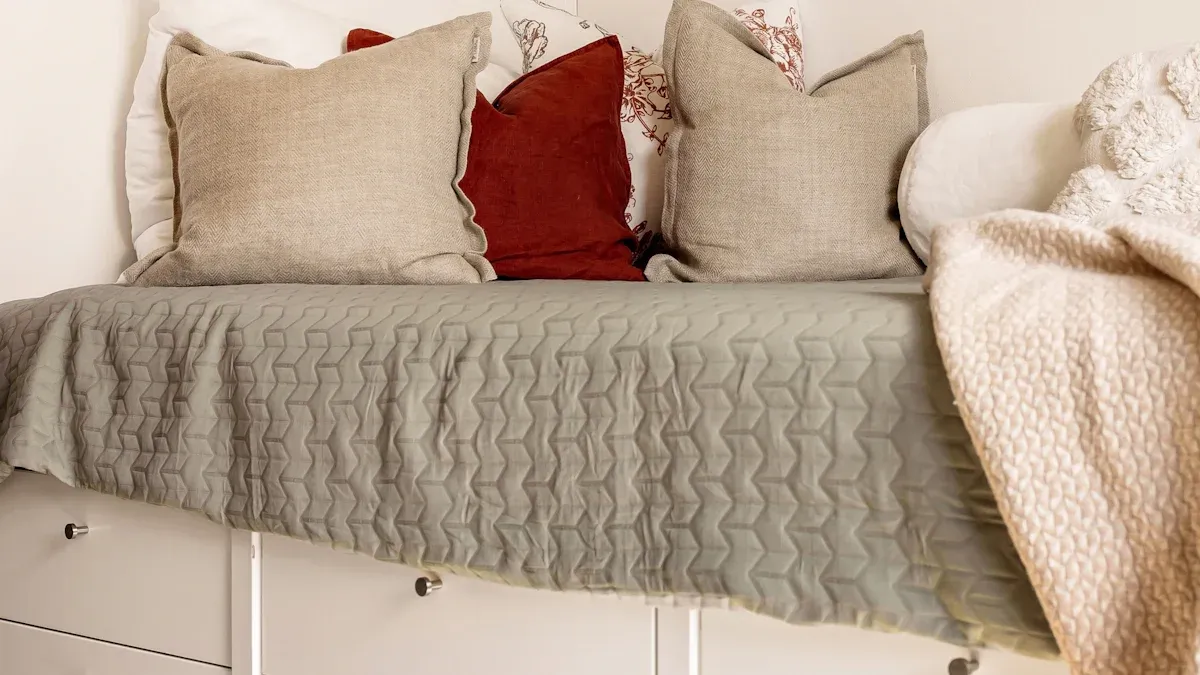
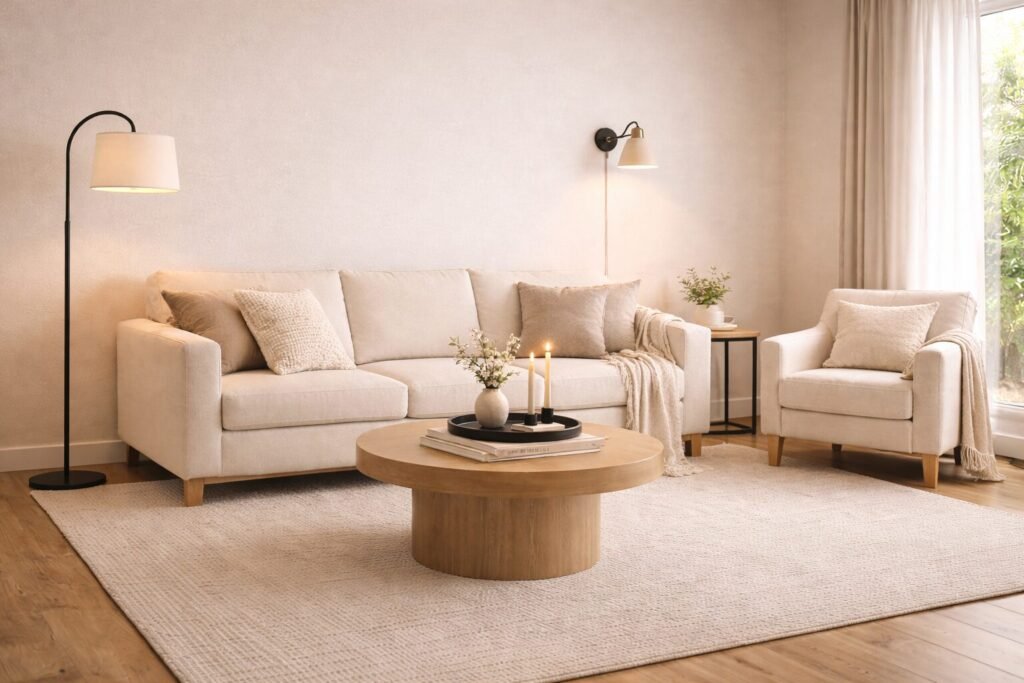
2) Measure + fit rules you can’t skip
If you only do one thing before buying: measure your seating zone (not just the room). The goal is a rug that supports how you actually sit, walk, and clean.
| Rug size | Best use | What it looks like |
|---|---|---|
| 5′ x 8′ | Small apartments; compact seating; tight walkways | Often “front legs only” (or fully floating in very small rooms) |
| 8′ x 10′ | Most average living rooms; standard sofa + chairs | Typically front legs on; looks balanced and intentional |
| 9′ x 12′ (or larger) | Large rooms; sectionals; open concept zones | More “all legs on” options; stronger zone definition |
Quick decision
- Best for: Avoiding the #1 mistake—choosing a rug that’s too small.
- Avoid if: You can’t accommodate door swing/clearance (measure that first).
- Size check: Leave 12–18 inches of bare floor from rug edge to walls (or as close as possible if space is tight).
Shop: 8×10 area rugs Shop: 9×12 low-pile rugs Shop: large rugs for sectionals
Budget pick: 8×10 area rugs
Best overall: 9×12 low-pile rugs
Premium pick: Large rugs
Bundle add-on: Outline your top two sizes with painter’s tape so you can see walking space and furniture fit before you commit.
Style matcher
- Modern: Straight edges; minimal pattern; consider a bold border.
- Warm Modern: Soft, slightly distressed pattern; beige/ivory; cozy texture.
- Luxury Modern: Oversized scale patterns; deeper taupe/charcoal; refined finish.
3) Placement layouts: all legs vs front legs vs floating
Rug placement is what makes the size “work.” If your rug is the right size but placed too far forward (or too small for the furniture), the room still feels off. Use these layout rules to make your seating area look grounded.
Quick decision
- Best for: Creating a clear conversation zone in open concept spaces.
- Avoid if: You can’t keep at least the front legs of major seating on the rug.
- Size check: Your rug should reach under the front legs of the sofa and any main chairs (minimum).
All furniture on the rug
- Best in larger rooms or when you want a more “designed” look.
- Helps the rug read as the foundation for the whole zone.
Front legs only
- Most common (and most forgiving) layout.
- Great for average living rooms and many sectionals.
Floating rug
- Use sparingly—only when the rug is still large enough to “hold” the coffee table and visually connect seating.
- Works best in very small rooms or layered-rug setups.
Shop: 9×12 living room rugs Shop: 8×10 rugs (front-legs layout) Shop: rugs for open concept zones
Budget pick: 9×12 living room rugs
Best overall: 8×10 rugs
Premium pick: Rugs for open concept
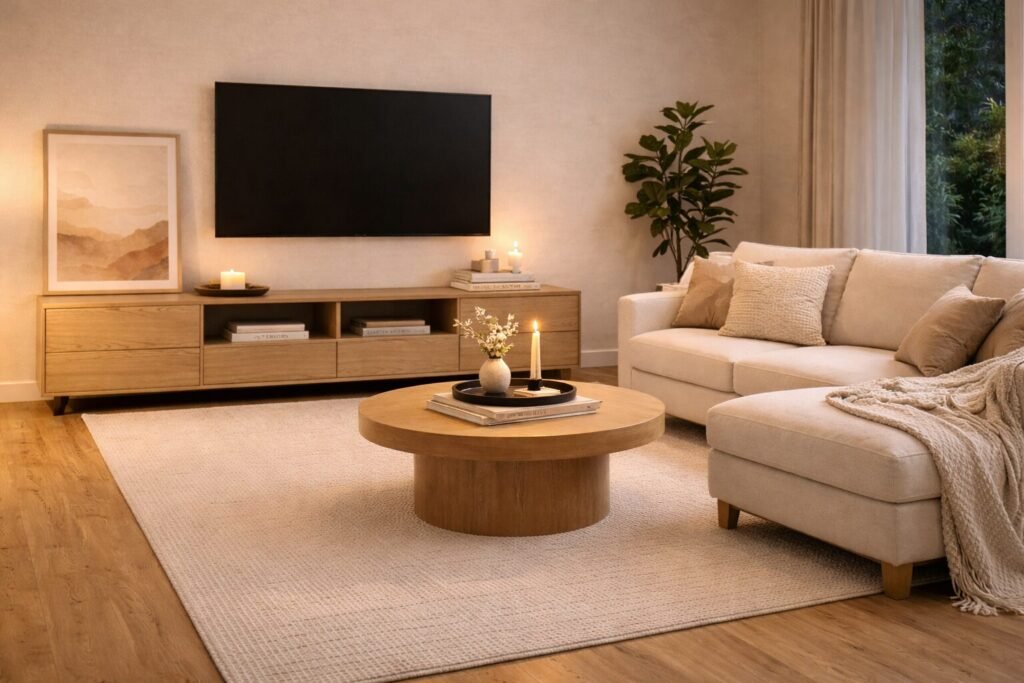
Bundle add-on: If you have a TV wall, add felt pads for furniture legs so pieces move easily while staying aligned on the rug: shop felt furniture pads.
Style matcher
- Modern: Centered rug aligned with the TV wall + media console; clean edges.
- Warm Modern: Slightly oversized rug that adds softness; layered textures (linen, bouclé).
- Luxury Modern: Larger rug that fully frames the seating group; curated, minimal accessories.
4) Materials & pile height: what works (and what to avoid)
In living rooms, the best rug is the one you can live with. Pile height affects everything: vacuuming, chair legs, crumbs, pet hair, and how the rug lays over time. As a rule: low to medium pile is easiest for most households.
Quick decision
- Best for: Daily lounging + easy cleaning (especially if you eat snacks in the living room).
- Avoid if: You hate fluff maintenance—very plush/high pile shows tracks and holds debris.
- Size check: If you’re placing chairs on the rug, favor low pile so legs don’t wobble.
- Low pile / flatweave: Easiest to vacuum; best for chairs, door clearance, and high-traffic paths.
- Medium pile: Cozy underfoot; still practical if you use a good pad.
- High pile / shag: Soft but higher maintenance; not ideal for dining-in-the-living-room or heavy shedding pets.
Shop: low-pile living room rugs Shop: flatweave 8×10 rugs Shop: washable rugs for kids & pets
Best overall: Low-pile living room rug
Premium pick: Modern Abstract Design
Bundle add-on: If you want extra comfort without going high pile, add a thicker pad: shop thick rug pads.
Style matcher
- Modern: Flatweave; graphic pattern; crisp edges.
- Warm Modern: Low-to-medium pile; vintage-inspired pattern; soft neutrals.
- Luxury Modern: Subtle texture; tone-on-tone patterning; deeper neutral base.
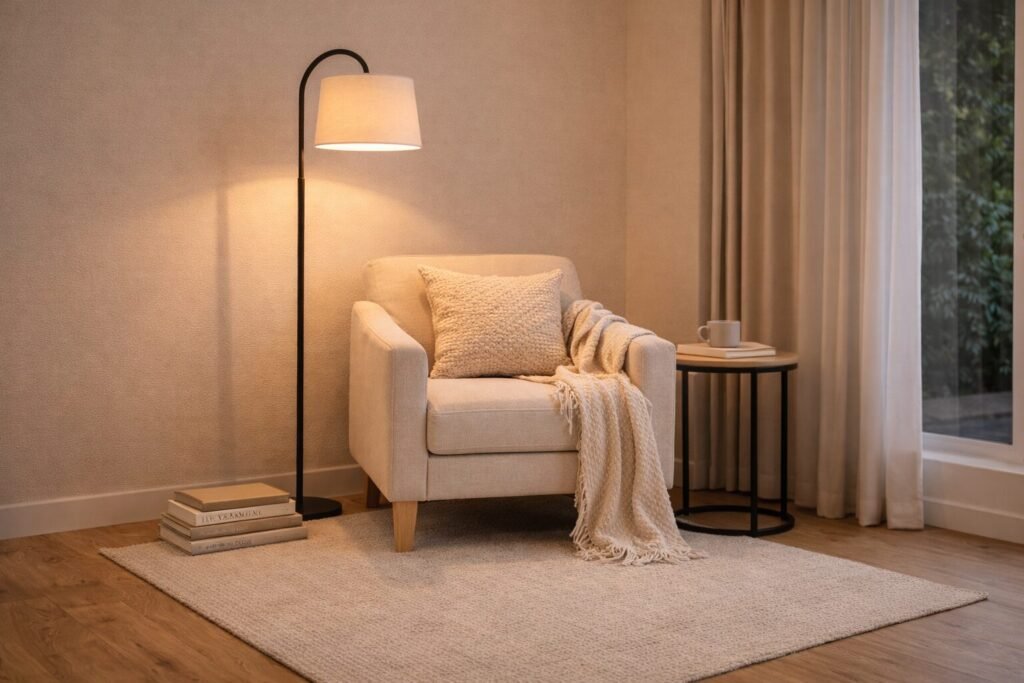
5) Renter-friendly setup + safety upgrades
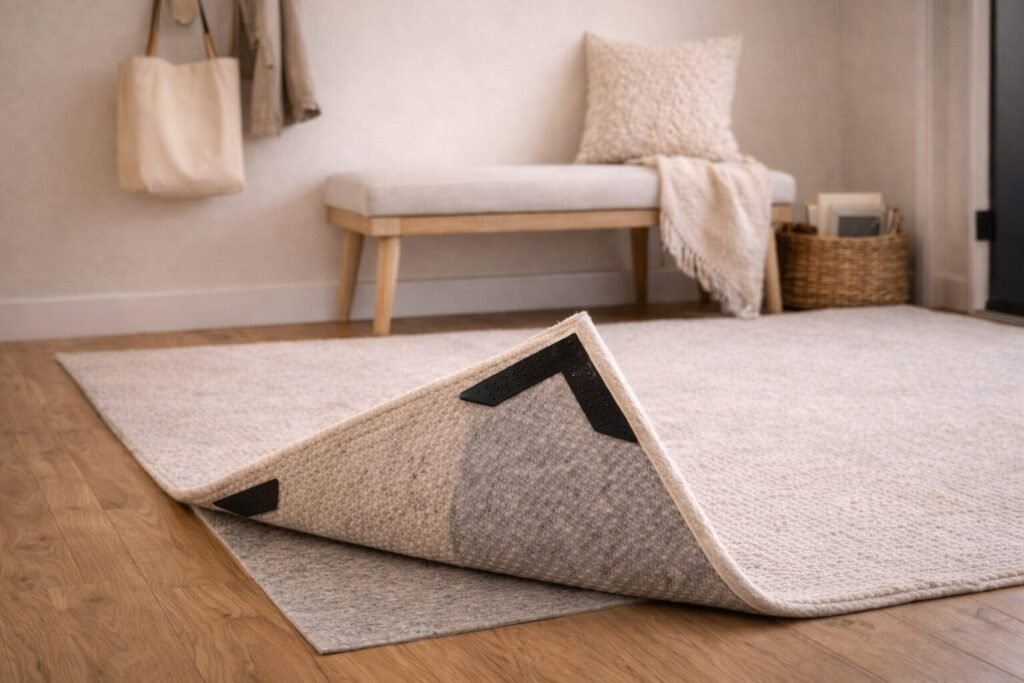
You don’t need permanent changes to make a rug sit flat, feel plush, and stay put. The renter-friendly approach is all about grip + padding + safe edges—especially important if you have kids, pets, or a frequently used walkway.
Quick decision
- Best for: Renters, hardwood floors, open walkways, and homes with pets/kids.
- Avoid if: You plan to skip a pad—most rugs look and feel better with one.
- Size check: Pad should be 1–2 inches smaller than the rug on all sides so it won’t show.
Shop: non-slip rug pads Shop: rug corner grippers Shop: washable 8×10 low-pile rugs
Premium pick: Grip Corners Floors Bundle
Bundle add-on: If you’re styling near an entry path, add a durable doormat to reduce grit that wears rugs faster: shop neutral doormats.
Style matcher
- Modern: Clean-lined rug + hidden grips; keep accessories minimal.
- Warm Modern: Add texture with a cozy pad; soft neutrals and rounded accents.
- Luxury Modern: Thicker pad for that “hotel suite” feel; refined patterning.
6) Care, maintenance, and common mistakes
The right size rug should make daily life easier—not harder. A few simple habits keep the rug looking good and help it last: rotate it, vacuum it the right way for the pile, and keep edges flat.
Quick decision
- Best for: Homes where the living room is heavily used (kids, pets, frequent guests).
- Avoid if: You want a “delicate” rug in the highest-traffic zone—choose practicality here.
- Size check: If the rug constantly creeps or curls, it’s usually a pad/edge issue (not a “bad rug”).
- Rotate every 3–6 months so traffic patterns fade evenly.
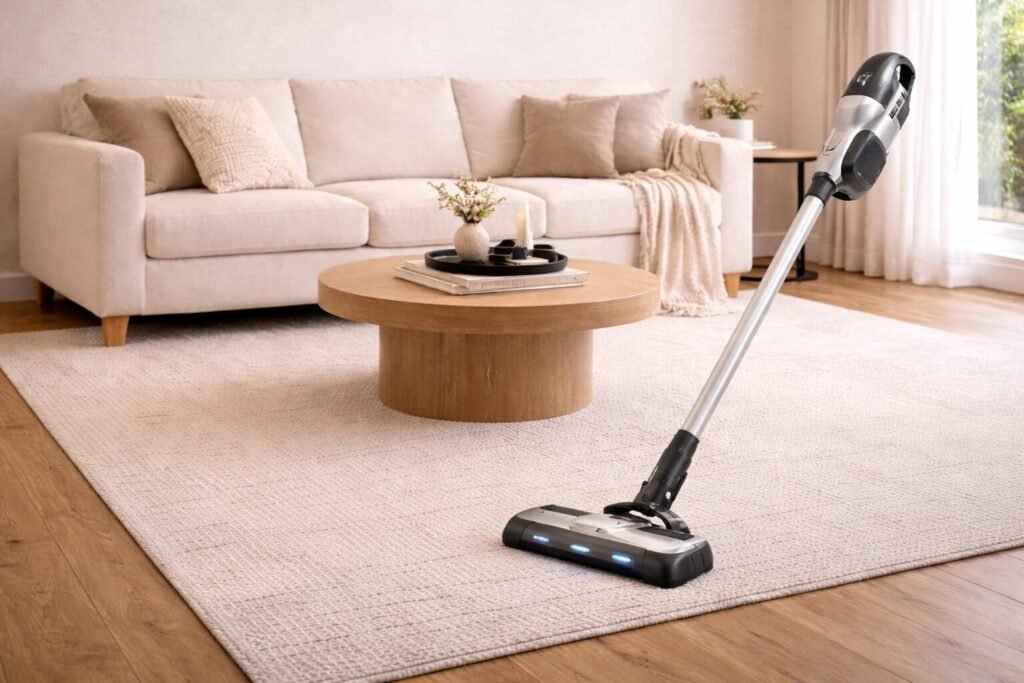
- Vacuum with the pile (especially on plush rugs) to reduce fuzzing.
- Spot clean quickly and avoid over-wetting the backing.
- Watch furniture “bite”: heavy legs can compress pile—pads help.
Common mistakes to avoid:
- Buying a rug that only fits under the coffee table (it makes the room feel disconnected).
- Placing the rug too far forward so the sofa feels like it’s “floating away.”
- Choosing shag/high pile for a chair-heavy layout (wobble + harder cleaning).
Shop: rug vacuum attachments Shop: anti-curl rug grippers Shop: stain-resistant low-pile rugs
Budget pick: Rug vacuum
Best overall: Rug edge corner grippers anti curl
Premium pick: Stain resistent rug
Bundle add-on: If your living room connects to the kitchen/dining zone, consider a compact handheld spot cleaner tool search: shop portable spot cleaners.
Style matcher
- Modern: Keep the rug simple; let the sofa wall lines stay crisp.
- Warm Modern: Choose a soft pattern that hides lint and daily footprints.
- Luxury Modern: Subtle pattern + larger scale rug for a calmer, more expensive look.
Shop by room/zone
Pick your zone first, then shop rugs that match how you actually use that area.
- Entry corner: shop neutral entry rugs
- Reading nook corner: shop round rugs for a nook
- Sofa wall: shop 8×10 rugs for sofa setups
- Window/curtain wall: shop light neutral rugs
- TV wall + media console: shop rugs for TV rooms
Shop by constraint
If you have a “must-have” limitation, shop that first—then refine color and pattern.
- Renters: shop renter-friendly rug pads
- Small space: shop 5×8 for small living rooms
- Low light rooms: shop ivory/beige rugs
- Pets: shop pet-friendly washable rugs
- Kids: shop stain-resistant washable rugs
- Low ceiling / tight rooms: shop flatweave rugs
Amazon Shopping Links & Anchor Picks
Use these scannable links to shop by size, material, and scenario. (Affiliate links include the required tag.)
How we choose these picks
- Sizes and search shortcuts that fit common sofa-and-chairs layouts (not just “pretty photos”).
- Everyday usability: vacuuming, door clearance, chair stability, and walk paths.
- Renter-friendly add-ons that improve safety and comfort without permanent changes.
- Patterns and palettes that stay flexible if you swap pillows, curtains, or wall art later.
FAQ
What size rug is best for most living rooms?
For many homes, an 8′ x 10′ rug is the easiest “default” because it typically reaches the front legs of seating and balances the room without overwhelming it.
How far should a living room rug be from the wall?
Aim for about 12–18 inches of bare floor between the rug edge and the walls when you can. In very small rooms, keep the border consistent even if it’s slightly smaller.
Should the rug go under the sofa?
Ideally, yes—at least the front legs of the sofa should sit on the rug. This anchors the seating zone and prevents the “tiny rug floating in the middle” look.
What if my living room is an odd shape?
Measure the widest and longest usable area, then size the rug to the seating zone (sofa + chairs) rather than the room’s outer perimeter. Use tape to test the best rectangle.
Is a 5′ x 8′ rug too small for a living room?
It can work in small apartments or compact layouts, especially if the goal is to sit under the coffee table and visually define a tight seating area—just plan for more furniture off-rug.
Do I need a rug pad?
Most living rooms benefit from a rug pad for grip, comfort, and flatter edges. Choose a pad slightly smaller than the rug so it stays hidden.