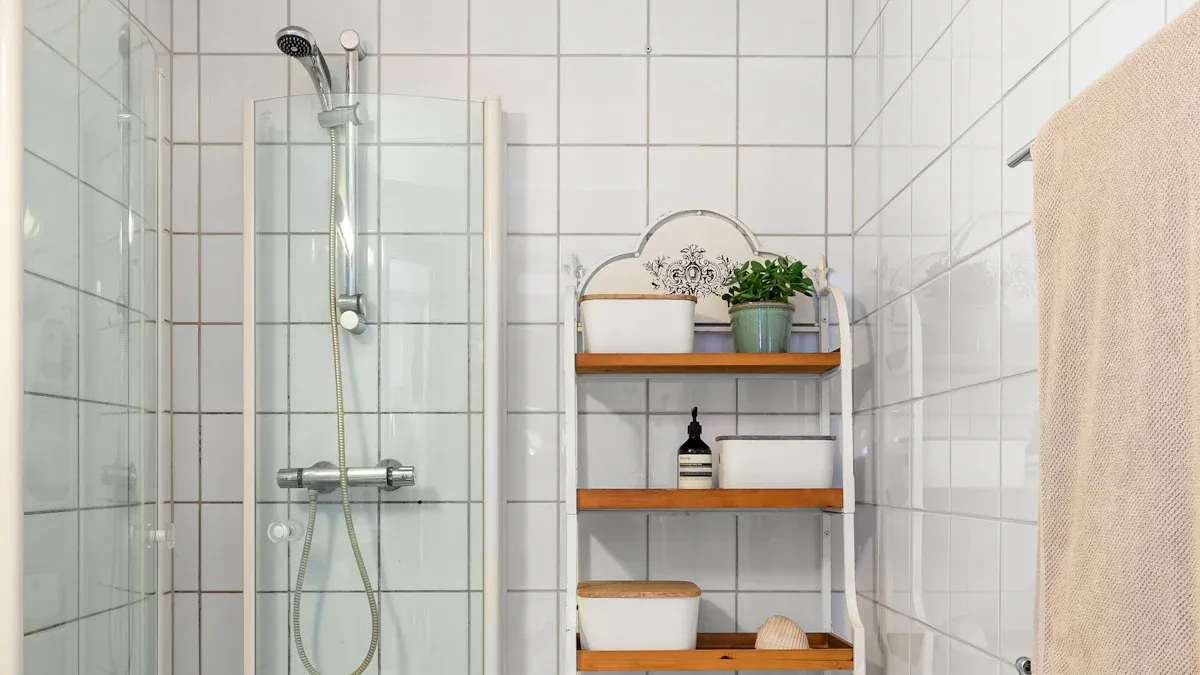

Small Bathroom Organization Guide: Declutter, Store Smarter, Keep It Easy
A small bathroom can feel calm and functional when every item has a place—and that place is sized for real life. This guide walks you through a simple checklist system you can set up in a weekend and maintain in minutes.
Why this guide works: It’s built around measurements (so bins actually fit), renter-friendly limits (no-drill options), and daily usability (what you reach for every morning).
Top Picks / Fastest Wins (above the fold)
- Under-sink pull-out bins to stop “everything pile-ups.” Shop under-sink organizers
- Drawer dividers for makeup, skincare, and grooming tools. Shop bathroom drawer organizers
- Over-the-door pocket organizer for hair tools + backups. Shop over-the-door organizers
- Rustproof shower corner caddy to lift bottles off the floor. Shop shower caddies
- Label kit so the system stays put. Shop waterproof labels
Table of Contents
- What this checklist system is (and why it works)
- Sizing & fit rules (so storage actually fits)
- Containers that look calm (and what to avoid)
- Renter-friendly wall + door solutions
- Zone-by-zone setup: shower, sink, under-sink
- Care & maintenance: the 10-minute reset
- Shop by room/zone
- Shop by constraint
- Amazon Shopping Links & Anchor Picks
- How we choose these picks
- FAQ
What this checklist system is (and why it works)
Quick decision
- Best for: tiny bathrooms, shared bathrooms, anyone who hates countertop clutter
- Avoid if: you store bulk backups in the bathroom (move backups elsewhere first)
- Size check: measure drawer interior width/depth, under-sink height, and door clearance before buying organizers
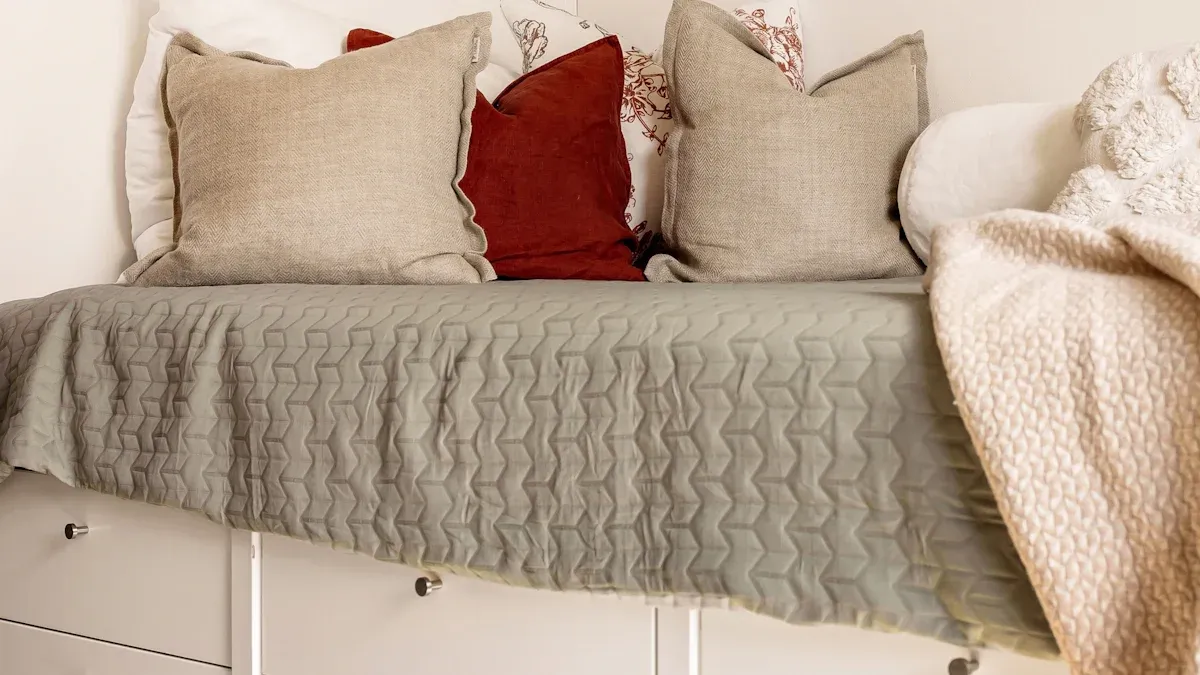
This guide uses a simple rule: keep only what you use, store it by category, and assign a “home” to each category. The payoff is instant: faster mornings, fewer duplicates, and a bathroom that feels bigger because surfaces stay clear.
Mini checklist (start here):
- Empty one area at a time (sink, one drawer, under-sink).
- Sort into: daily, weekly, backup, and “not bathroom” (move those items out).
- Toss expired products and empty bottles immediately.
- Create 3–5 simple categories (hair, skin, dental, meds/first aid, cleaning).
High-intent Amazon searches (exactly 3):
Anchor picks (3 product slots):
- Budget: Budget bathroom organizer bin set
- Best overall: Best overall bathroom organizer set (clear bins)
- Premium: Premium acrylic bathroom organizer set
Bundle add-on (to complete the system): pair bins with labels so the setup stays consistent. Shop waterproof label tape
Style matcher
- Modern: clear bins + matte black label tape; keep countertops nearly empty
- Warm Modern: light oak or woven bins + soft neutral labels
- Luxury Modern: matching acrylic sets + minimal metal accents (brass or black)
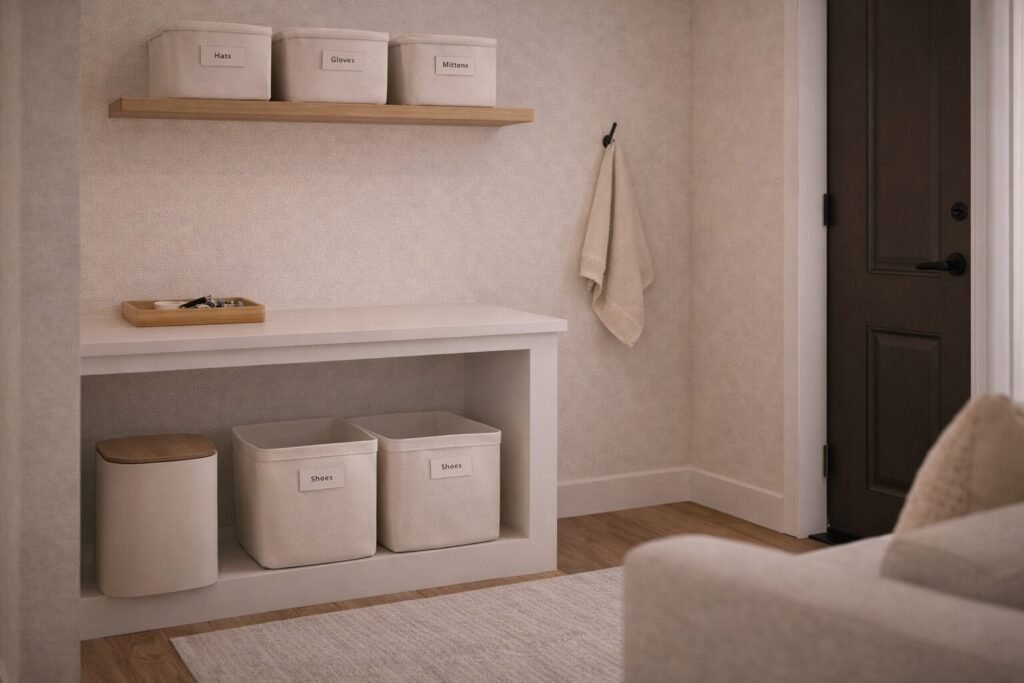
Sizing & fit rules (so storage actually fits)
Quick decision
- Best for: avoiding returns, maximizing every inch, keeping drawers smooth
- Avoid if: you won’t measure—this is the one step that makes everything else easier
- Size check: measure inside dimensions (not the front), and subtract ~0.5 in (1–1.5 cm) for clearance
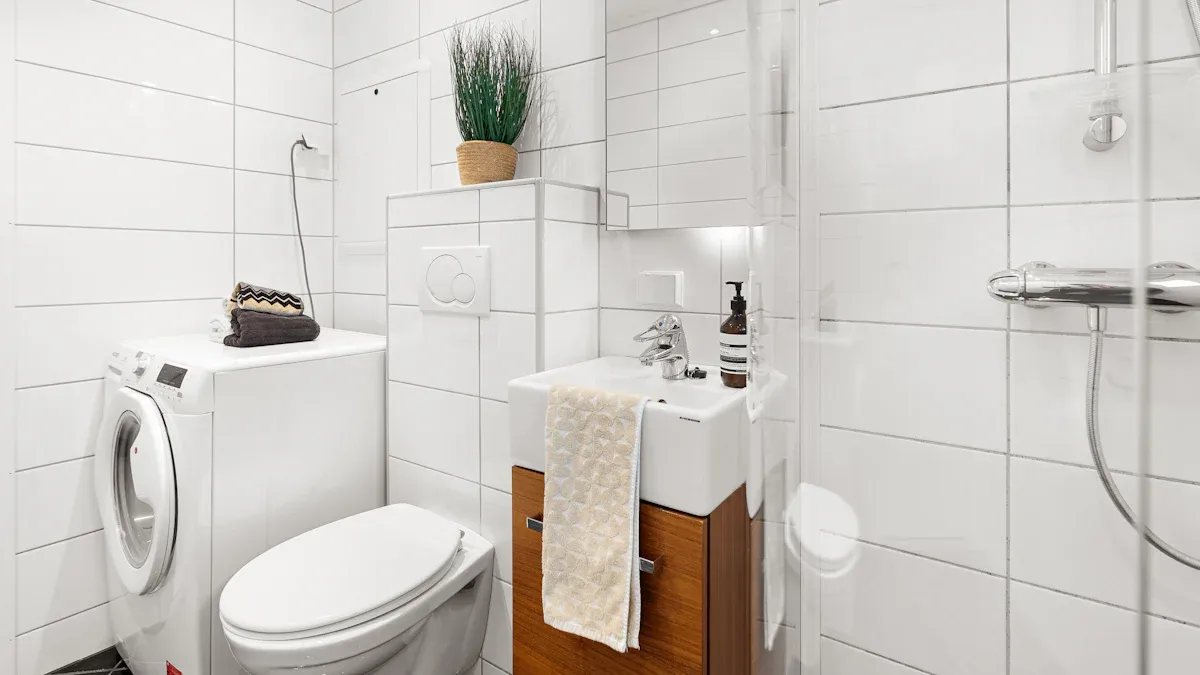
Before you buy anything, measure these three areas. It prevents the most common small-bathroom storage problem: organizers that waste space.
- Drawers: interior width, depth, and height (especially if you stack trays).
- Under-sink cabinet: usable width + height around plumbing (note the lowest clearance point).
- Door space: how much the door can close with an organizer (and whether it hits towel bars or hooks).
High-intent Amazon searches (exactly 3):
- Bathroom drawer organizers
- Adjustable drawer dividers (bamboo)
- Under-sink organizer (fits around plumbing)
Anchor picks (3 product slots):
- Budget: Budget bathroom drawer tray set
- Best overall: Best overall adjustable drawer divider
- Premium: Premium modular bathroom drawer organizer system
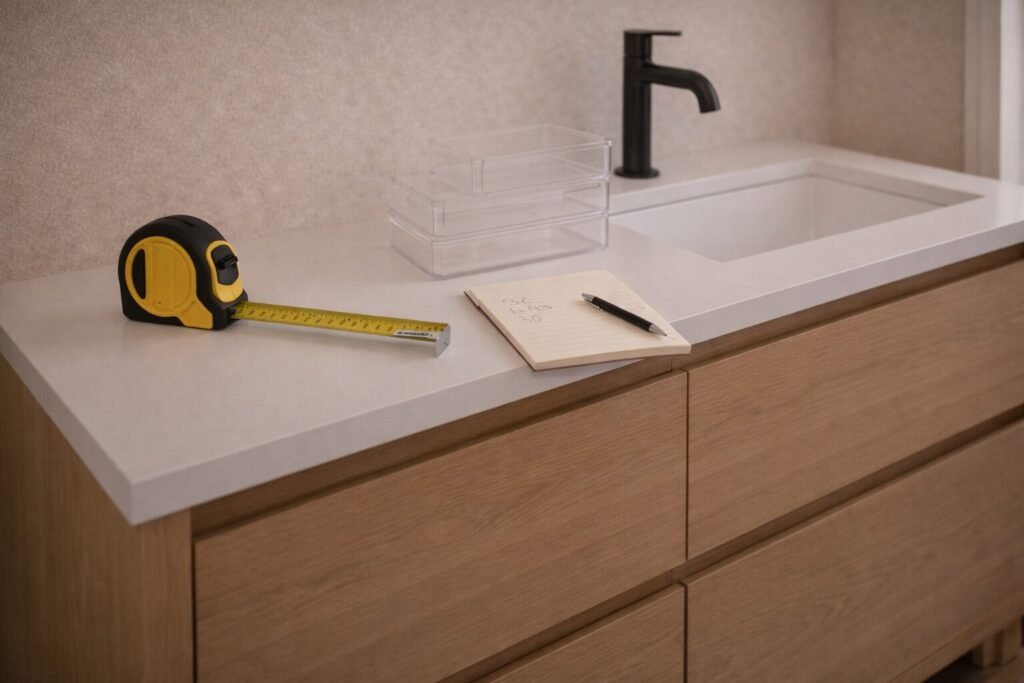
Bundle add-on: a small tape measure that stays in the bathroom for quick checks. Shop compact tape measures
Style matcher
- Modern: slim, rectangular trays; straight lines; minimal labels
- Warm Modern: bamboo dividers; soft-tone labels; woven texture accents
- Luxury Modern: clear acrylic trays; consistent sizing; matching containers
Containers that look calm (and what to avoid)
Quick decision
- Best for: making open shelving look tidy, keeping categories separated
- Avoid if: you buy mismatched bins “as you go” (that’s how clutter returns)
- Size check: pick 1–2 bin footprints that repeat (ex: small + medium) and stick to them
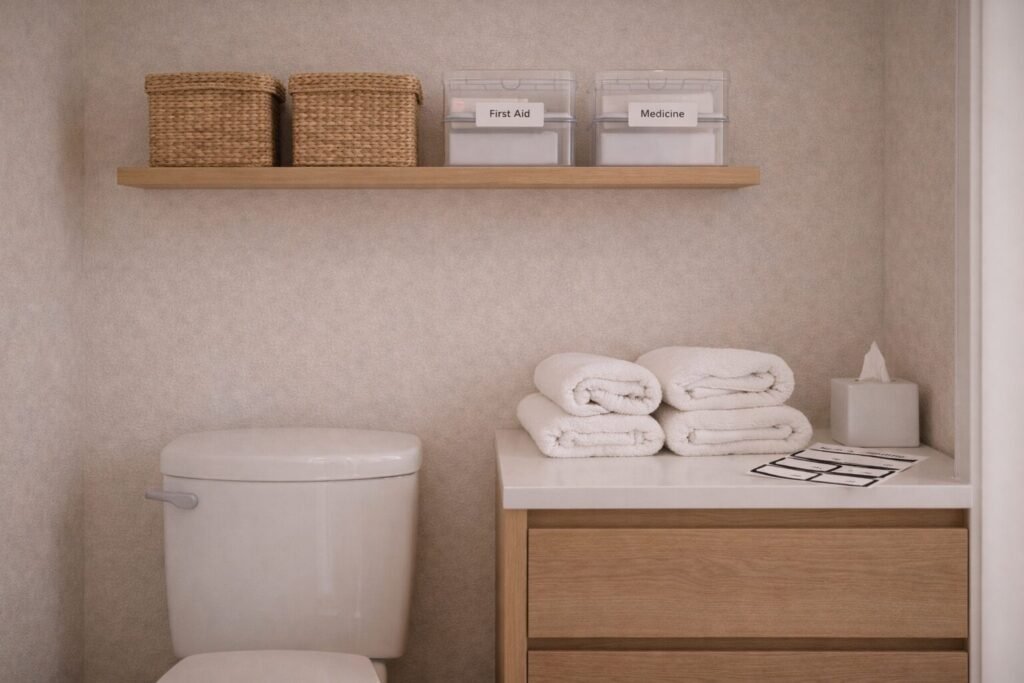
The calmest bathrooms use fewer container types. Choose one “hidden clutter” bin style (solid) and one “quick visibility” style (clear).
- Solid bins/baskets: best for backups, cleaning supplies, and anything visually noisy.
- Clear bins: best for daily categories you want to grab fast (skincare, hair, dental).
- Jars/canisters: best for tiny items (cotton rounds, hair ties) if you’ll actually refill them.
What to avoid: overly tall bins that topple, wire baskets that snag washcloths, and containers that can’t be wiped clean.
High-intent Amazon searches (exactly 3):
Anchor picks (3 product slots):
- Budget: Budget bathroom storage bin set
- Best overall: Best overall stackable clear bathroom bin set
- Premium: Premium matching bathroom canister set
Bundle add-on: non-slip shelf liner to keep bins from sliding and reduce rattling. Shop waterproof shelf liner
Style matcher
- Modern: clear rectangles; minimal labels; black/white accents
- Warm Modern: woven + clear mix; light oak tones; linen textures
- Luxury Modern: uniform acrylic; curated emptier shelves; subtle metal accents
Renter-friendly wall + door solutions
Quick decision
- Best for: adding storage without drilling, keeping floors clear
- Avoid if: your walls are humid and paint is fragile (test adhesive first)
- Size check: confirm door gap clearance and hook depth so the door closes easily
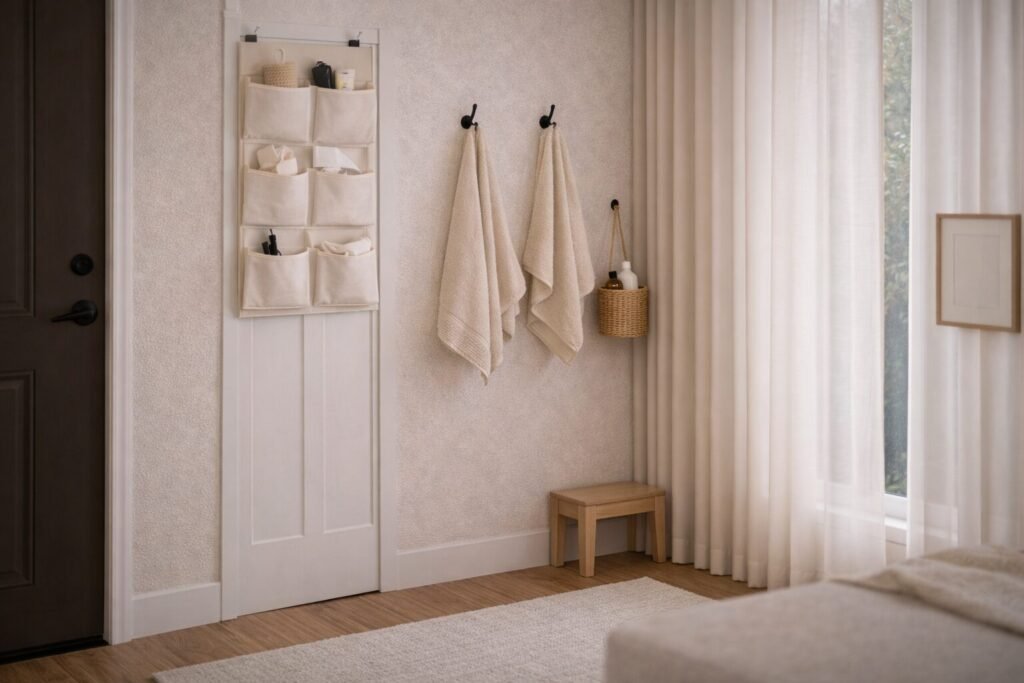
Vertical storage is the fastest way to make a small bathroom feel bigger. Think: hooks, hanging baskets, and back-of-door organizers that hold the “awkward” items (hair tools, extra wipes, refills).
- Hooks: towels, robes, bath brushes, daily hair tools.
- Back-of-door pockets: refills, skincare backups, first aid, travel items.
- Adhesive shelves: small bottles near the sink or inside a cabinet door.
Want more shelf styling ideas for small spaces? See these creative shelving ideas.
High-intent Amazon searches (exactly 3):
Anchor picks (3 product slots):
- Budget: Budget adhesive hook set for bathroom
- Best overall: Best overall over-the-door bathroom organizer
- Premium: Premium no-drill bathroom shelf system
Bundle add-on: heat-resistant silicone mat for hair tools so counters stay protected. Shop heat-resistant mats
Style matcher
- Modern: matte black hooks; simple vertical lines; neutral containers
- Warm Modern: light oak pegs; woven baskets; soft textiles
- Luxury Modern: minimal metal hooks (brass/black); matching accessories; fewer items displayed
Zone-by-zone setup: shower, sink, under-sink
Quick decision
- Best for: shared bathrooms, tiny counters, anyone who wants “grab-and-go” zones
- Avoid if: you keep too many duplicates in each zone (cap backups)
- Size check: shower corner height, sink-side landing space, under-sink plumbing clearance
Shower zone: Keep only your current in-use bottles. Add a rustproof corner caddy so nothing sits on the tub ledge or floor.
- One shelf for hair, one shelf for body, one hook for tools (razor/loofah).
- If you have multiple people: assign one shelf per person.
Sink zone: Aim for a near-empty countertop. Store daily skincare and dental in one small tray or lidded bin, and keep everything else in a drawer.
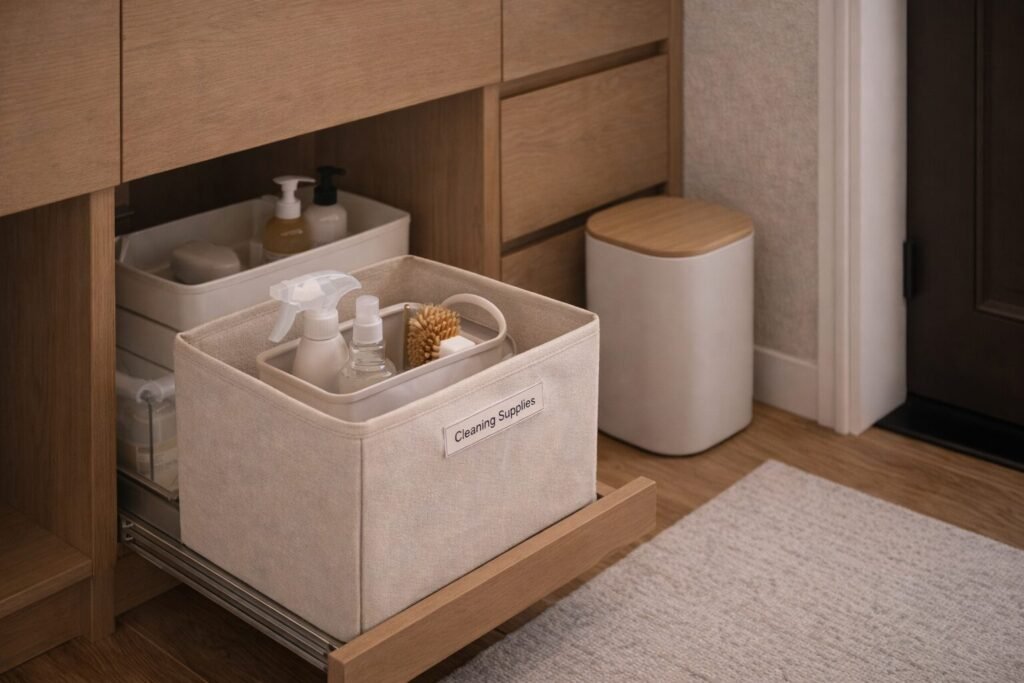
Under-sink zone: Use 2 categories only: “cleaning” and “backups.” Put each in its own bin so you can pull it out like a drawer.
High-intent Amazon searches (exactly 3):
- Shower corner caddy (rustproof)
- Bathroom counter tray (minimalist)
- Under-sink pull-out organizer (two-tier)
Anchor picks (3 product slots):
- Budget: Budget shower corner caddy
- Best overall: Best overall under-sink pull-out organizer
- Premium: Premium matching sink tray and canister set
Bundle add-on: microfiber cloth pack for quick wipe-downs (sink + mirror). Shop microfiber cloths
Style matcher
- Modern: one clean tray; minimal bottles visible; black/white hardware
- Warm Modern: light oak tray; linen hand towel; soft curved accessories
- Luxury Modern: lidded canisters; fewer items; curated “spa” vibe
Care & maintenance: the 10-minute reset
Quick decision
- Best for: keeping the system from slipping back into chaos
- Avoid if: you try to do “perfect” deep cleans—keep it small and consistent
- Size check: choose a trash can size that fits your space so it doesn’t overflow quickly
This is the routine that keeps a small bathroom feeling fresh without becoming a project.
- Daily (1 minute): put products back in their bin; quick counter wipe if needed.
- Weekly (10 minutes): wipe sink + mirror, quick toilet clean, empty trash, swap towels.
- Monthly (10 minutes): check backups, toss empties, re-align labels, wipe inside drawers.
High-intent Amazon searches (exactly 3):
Anchor picks (3 product slots):
- Budget: Budget small lidded bathroom trash can
- Best overall: Best overall bathroom cleaning caddy
- Premium: Premium refillable soap dispenser set
Bundle add-on: refillable pump bottles to reduce visual clutter and simplify wiping. Shop refillable pump bottles
Style matcher
- Modern: minimal counter; one tray; hidden backups
- Warm Modern: linen textures; light wood accessories; soft labels
- Luxury Modern: matching dispensers; lidded storage; “hotel tidy” surfaces
Shop by room/zone
Use these quick shopping links to build your bathroom system by the exact spot you’re fixing.
- Entry corner: hooks + a small tray for daily grab-and-go items. Shop adhesive hooks
- Reading nook corner: slim rolling cart for overflow or shared routines. Shop slim rolling carts
- Sofa wall: drawer dividers + stackable trays for grooming tools. Shop stackable drawer trays
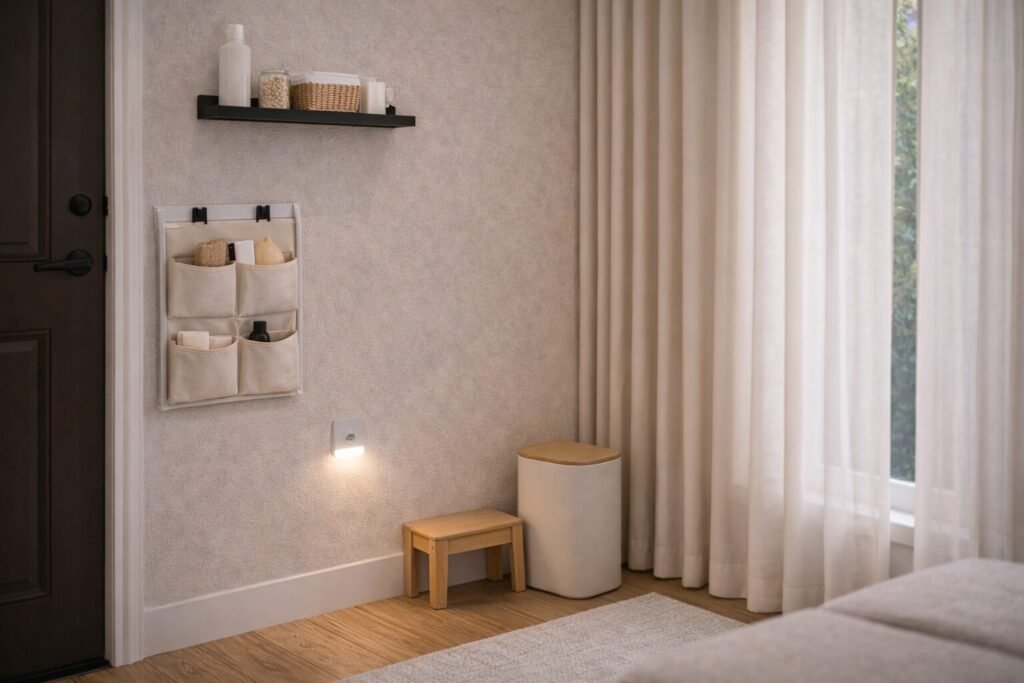
- Window/curtain wall: over-the-door organizer for refills and linens. Shop door organizers
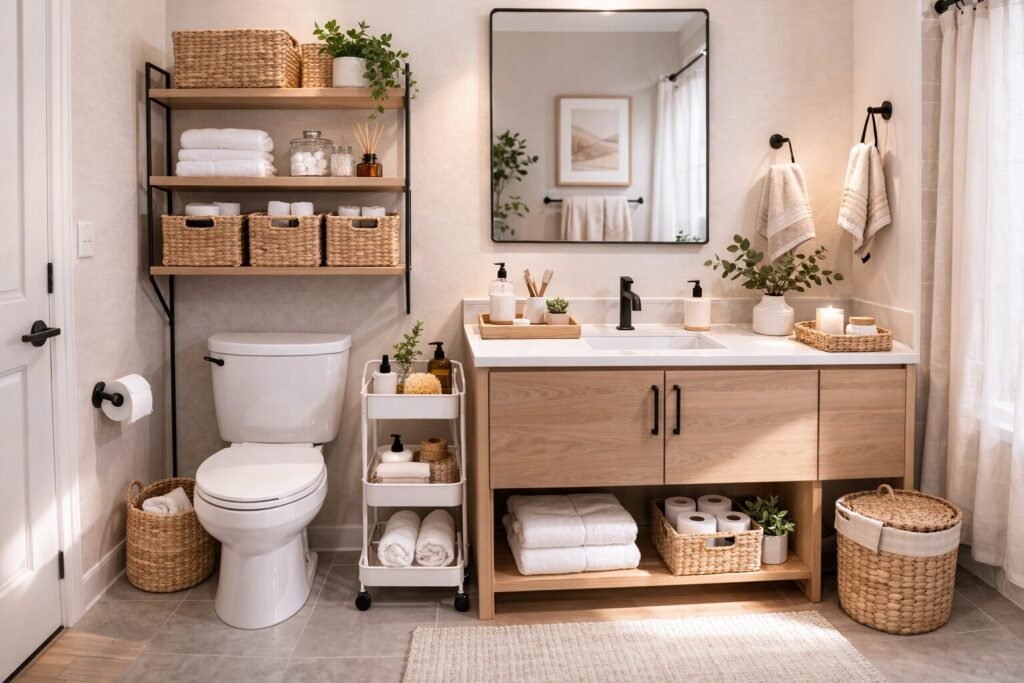
- TV wall + media console: over-toilet shelving for towels and baskets. Shop over-the-toilet storage
Shop by constraint
These links match common real-life limitations—so you can choose storage that won’t fight your space.
- Renters (no drilling): Shop no-drill bathroom storage
- Small space: Shop space-saving bathroom organizers
- Low light: Shop motion sensor night lights
- Pets: Shop lidded pet-resistant trash cans
- Kids: Shop kid-friendly drawer organizers
- Low ceiling / tight door swing: Shop low-profile over-door hooks
Amazon Shopping Links & Anchor Picks
Quick shop (search links)
Anchor picks (product placeholders)
- Bins & baskets: Budget Budget bathroom bin set · Best Best overall clear bin set for bathroom · Premium Premium matching bathroom canisters
- Drawers: Budget Budget bathroom drawer tray set · Best Best overall bathroom drawer dividers · Premium Premium modular bathroom drawer organizer set
- Shower: Budget Budget shower corner caddy · Best Best overall rustproof shower caddy · Premium Premium tension shower caddy
- Door & wall: Budget Budget bathroom hooks set · Best Best overall over-the-door bathroom organizer · Premium Premium no-drill bathroom shelf
Mandatory links (place where relevant)
[MANDATORY-LINKS]
How we choose these picks
- We prioritize storage that fits common small-bathroom measurements and clears plumbing obstacles.
- We favor wipeable, moisture-friendly materials that won’t warp or rust easily.
- We choose pieces that simplify daily routines (grab-and-go bins, quick resets, easy visibility).
- We include renter-friendly options (no-drill, removable, minimal damage where possible).
FAQ
How do I keep my small bathroom organized every day?
Keep one “daily” bin or tray for the items you use every morning, and put everything back into that bin when you’re done. Do a 60-second wipe of the counter when it looks busy, and empty the trash before it gets full.
What should I do with items I rarely use?
Move rarely used items into a labeled backup bin under the sink or in the lowest drawer. If you haven’t used something in a season and it’s unopened or still usable, consider donating it (and toss anything expired).
Can I organize a bathroom without buying new storage?
Yes. Start by decluttering and grouping by category. Repurpose shoeboxes, jars, and small bins from around the house, then label them. Once you know what sizes actually work, you can upgrade containers later if you want to.